



In the first part of the blog post you learned the importance of account types in S/4 HANA. In the second part I want to show some examples.
Accounts payable/receivable
Accounts payable/receivable can be defined as balance sheet accounts in account group “ABST” (Reconciliation account AP/AR).
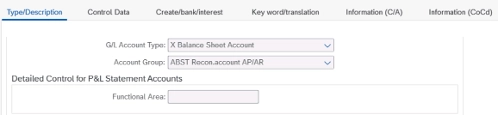
Open Item Management is activated for this account group. However line items in the compatibility views BSIS or BSAS aren’t available in S/4 for these accounts. When you activated line items in ECC for accounts payable/receivable, your custom ABAP programs, which read line items from accounts payable/receivable with the compatibility views, will not function in S/4 anymore.
Open items are visible the same way as in ECC in the compatibility views BSID, BSAD, BSIK and BSAK.
Revenue/costs accounts
You can define revenue/costs accounts as Primary Cost or Revenue accounts with the account group ERG Income Statement accounts.
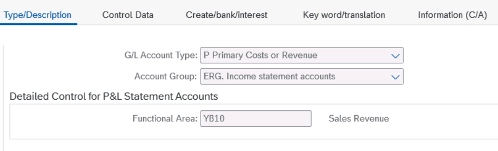
Line items in the compatibility view BSIS are still available for revenue/costs accounts in S/4. Your custom ABAP code accessing this compatibility view for reading revenues/costs should continue to work.
Inventory and goods receipt/invoice receipt accounts
Inventory accounts are balance sheet accounts with the “MAT” (Material management) account group:
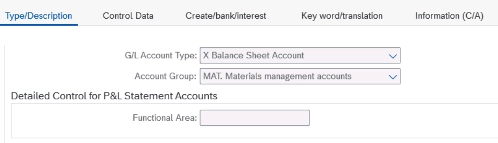
For material management accounts Open Item Management can be activated in the account settings. This is useful for goods receipt/invoice receipt accounts.
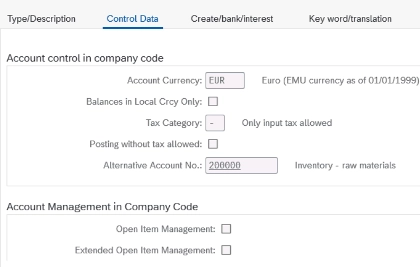
The items including items for goods receipt/invoice receipt accounts are available in the compatibility view BSIS or BSAS.
Liquid funds accounts
Liquid funds accounts are balance sheet accounts. The account group “FIN” was created for these accounts.
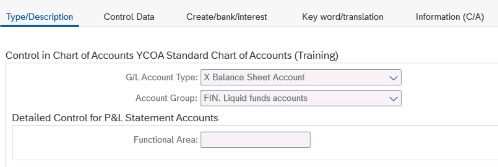
The items for liquid funds accounts are available in the compatibility view BSIS.
Conclusion
Beyond setting the correct account type and group, testing custom ABAP code, which utilizes compatibility views, is essential during a system conversion. In doubt you can replace the compatibility views by the universal journal in table ACDOCA, which contains all items regardless of the account type and group.
Want to know more? Get in touch with us for a free consultation now!
Related Posts

The Evolution of Risk: Credit Management in SAP ECC vs. S/4HANA
The Shift to the Universal Journal – Part 1